Noorani Qaida classes for beginners


Murouj Academy's Qaida classes teach complete beginners to read Arabic from zero with the Noorani Qaida, one letter at a time, until they can read the Quran on their own. Classes are live and one-to-one with native Arab teachers, for children and adult beginners. Women and girls learn with female teachers, and the first class is free.
Qaida Classes for Beginners at a glance
- Format
- Live one-to-one online classes. Murouj Academy never runs group classes.
- Who it's for
- Children and adults who cannot read Arabic yet, starting from zero
- Level
- Complete beginner
- Before you start
- Nothing. No Arabic is needed, and lessons are explained in English.
- What you use
- The Noorani Qaida, a step-by-step primer for reading Arabic
- Lesson length
- 30, 45 or 60 minutes
- Classes per week
- 2, 3, 4 or 5
- Teachers
- Native Arab teachers, including ijazah holders
- Teacher matching
- Female teachers for women and girls, male teachers for men; parents choose for children
- Outcome
- Read Arabic words and verses from the mushaf on your own, slowly and correctly
- Free trial
- One free trial class with your teacher
What is the Noorani Qaida?
The Qaida is the beginner's primer for reading Arabic, and the Noorani Qaida is the best-known one. It takes you from single letters to full words in small steps, so that by the end you can read the Arabic of the Quran on your own.
Every class is private, so there is no group watching and no pace to keep up with. Your teacher explains in English, repeats anything you ask and starts from wherever you are, even the very first letter.
Who is this course for?
Children
Young beginners learn the letters in short, friendly lessons with lots of repetition. Parents choose the teacher, and several of our teachers teach children from age 4.
Adult beginners
If you never learned to read Arabic, you start from the first letter in a private class, at your own pace, with nobody listening but your teacher.
Women and girls
Women and girls are always taught by a female teacher, so you can ask anything in a comfortable, private class.
Anyone rebuilding the basics
If you learned a little as a child and lost it, your teacher checks what you remember and starts from there.
What will you learn?
Your teacher builds a personalized curriculum from the stages below, starting from your level and skipping what you already know.
Stage 1: The Arabic letters
- The shape and sound of each letter
- Letters that look alike, told apart by their dots
- Letters that sound alike to English speakers
Stage 2: Joined letters
- How letters change shape at the start, middle and end of a word
- Reading two and three joined letters
Stage 3: Vowel marks
- Short vowels: fatha, kasra and damma
- Tanween, the doubled vowel endings
- Long vowels with alif, waw and ya
Stage 4: Sukun and shaddah
- Letters with no vowel (sukun)
- Doubled letters (shaddah)
- Reading full words with every mark
Stage 5: Reading the Quran
- Words and short phrases from the Quran
- Your first verses read directly from the mushaf
Milestones along the way
- Recognize and pronounce every Arabic letter
- Read letters joined into words
- Read every vowel mark, sukun and shaddah
- Read a verse you have never seen before, slowly and correctly
- Move on to tajweed or memorization with confidence
How fast will you progress?
It depends on the student: your starting point, your age, how many classes you take each week and how much you practice in between. Your teacher sets a personalized plan after the free trial class and reviews it with you as you go, so your milestones fit you rather than a fixed timetable.
What does the Qaida cover, and when have you finished it?
Each step builds on the one before. Your teacher listens to every letter you read and corrects it on the spot, which is why one-to-one classes suit the Qaida so well.
| Step | What you learn |
|---|---|
| Single letters | The shape and correct sound of each Arabic letter |
| Joined letters | How letters change shape at the start, middle and end of a word |
| Short vowels (harakat) | Fatha, kasra and damma: reading letters with a vowel |
| Tanween | The doubled vowel endings that add an n sound |
| Long vowels | Alif, waw and ya that lengthen a sound |
| Sukun and shaddah | Letters with no vowel, and doubled letters |
| Reading practice | Words and short phrases from the Quran |
You have finished the Qaida when you can read a verse you have never seen before, slowly but correctly, without help. From there most students move on to Tajweed classes to polish their recitation. Our Noorani Qaida guide and Arabic alphabet pronunciation guide are good companions while you learn the letters.
How do the classes work?
One-to-one, never in a group
Every class is just the student and the teacher, so the teacher hears every letter and corrects it on the spot.
A personalized plan
Your teacher checks your level in the free trial and plans the lessons around your pace and the time you have.
You choose your teacher
You choose your teacher, keep them while it is a good fit, and can switch at any time. Matching is never random.
A free trial class first
Your first class is a free trial with your teacher, so you can meet them and see how lessons work.
Times that suit you
Every class is set at an hour that suits you, in your own time zone, whether you live in the US, Canada, the UK or Australia.
Murouj's own online classroom
Lessons run in Murouj Academy's classroom, with a shared whiteboard for the letters and the lesson pages on screen. There is no account or app to install.
Lessons are 30, 45 or 60 minutes, 2 to 5 times a week; the packages page explains the options. Most students stay with Murouj Academy for more than a year. For class times in your time zone, see our pages for the United States, Canada, the United Kingdom and Australia.
Not sure where to start?
Book a free trial class: your teacher checks your level and suggests a first step.
Who teaches this course?
Every Murouj Academy teacher is a native Arab from the Arab world. Some hold an ijazah, and each profile states which. Many of our teachers studied at or are certified by Al-Azhar. Women and girls are taught by female teachers, adult men by male teachers, and for children the parent chooses. These are some of the teachers who teach this course, with details from their own bios.

Noha A.
Female teacher
Ijazah in Quran recitation from a qualified shaykh. Has memorized the whole Quran and trained to teach the Nour Al-Bayan Qaidah.
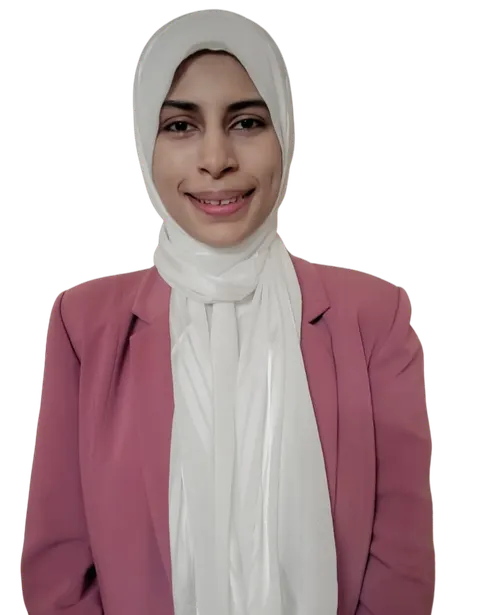
Soha A.
Female teacher
Certified in the Qaidah, tajweed for non-Arabic speakers and Islamic studies. Teaches all levels, from the Qaidah up.

Salma O.
Female teacher
Has memorized the whole Quran. Holds certificates in Tuhfat al-Atfal, the Qaidah and tajweed for non-Arabic speakers.

Shereen M.
Female teacher
Has memorized the whole Quran. Teaches children from age 4 and adults, from beginner to advanced.
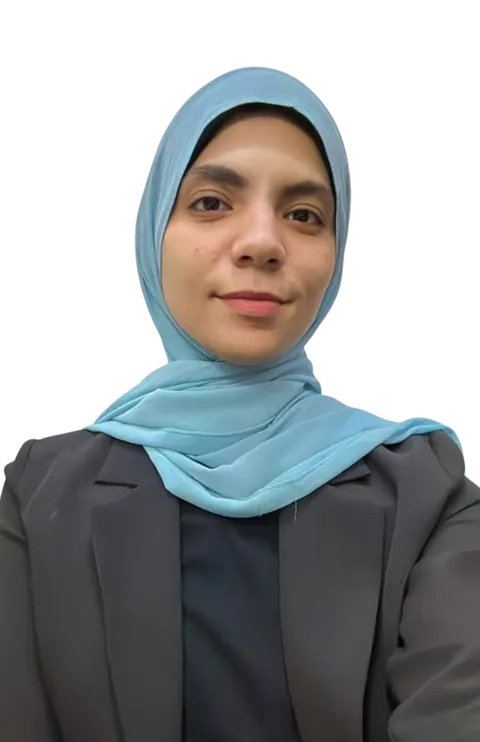

Mohammad S.
Male teacher
Bachelor's degree in Islamic Studies from Al-Azhar University. Has memorized the whole Quran and teaches non-Arabic speakers from the basics up.


Meet all our teachers and read their full bios, then choose the one you would like for your free trial class.
How do one-to-one classes with a native Arab teacher compare?
Group classes and teachers who learned Arabic later both help many students. Murouj Academy chooses one-to-one classes and native Arab teachers so that every student gets a teacher's full attention and hears the Quran's language from someone who has spoken it since childhood.
| One-to-one at Murouj Academy | A group class | |
|---|---|---|
| Attention | The whole lesson is yours, and the teacher hears every letter you recite | Lesson time is shared between several students |
| Pace | Set by you: you move on when you are ready | Set for the group as a whole |
| Curriculum | A personalized plan built around your level and goals | One syllabus for the whole class |
| Schedule | An hour that suits you, in your own time zone | A fixed timetable |
| Teacher | You choose your teacher and can switch at any time | Usually comes with the class |
| Comfort | Women and girls with a female teacher, men with a male teacher, one to one | Depends on how the class is run |
| Murouj Academy's native Arab teachers | Teachers who learned Arabic later | |
|---|---|---|
| Pronunciation | The sounds of Arabic, modeled as a first-language speaker says them every day | The sounds of Arabic, learned through study and practice |
| Meaning | Explanations that draw on everyday use of Arabic | Explanations that draw on formal study of Arabic |
| Qualification | Some Murouj teachers hold an ijazah; each profile states it | Varies by teacher and academy |
What do students say?
Students and parents describe their classes in their own words on our student reviews page.
Frequently asked questions
What is the Noorani Qaida?
The Noorani Qaida is a beginner's primer for reading Arabic. It teaches the letters, then joined letters and vowel marks, step by step, until you can read the Quran on your own.
Do I need to know any Arabic to start?
No. Qaida classes start from the very first letter, and lessons are explained in English. Our teachers are native Arabic speakers who also teach in English.
Is the Qaida course for children or adults?
Both. Children learn in short, friendly lessons, and adult beginners learn privately at their own pace. Every class is one-to-one.
How long does it take to finish the Qaida?
It depends on the student, the number of classes each week and practice between them. Your teacher sets a personal plan after the trial class and reviews it with you as you progress.
What comes after the Qaida?
Once you can read on your own, most students move on to tajweed, to recite with the correct rules, or to Quran memorization.
Can I learn with a female teacher?
Yes. Women and girls at Murouj Academy are always taught by female teachers. Adult men are taught by male teachers, and for children the parent chooses.
Do I need to install anything to join?
No. Classes run in Murouj Academy's own online classroom, which opens from a link on a phone, tablet or computer, with no account or app to install.
Is the first Qaida class free?
Yes. Your first class is a free trial with your teacher. After that you choose a package of 2 to 5 classes a week; the packages page explains the options.
More answers about classes, teachers and the free trial are on our Murouj Academy facts page.
Keep exploring
Free guides
Classes for your family
Ready to begin?
Your free trial class is with the teacher you choose. Women and girls always learn with female teachers, and you can switch teacher at any time.